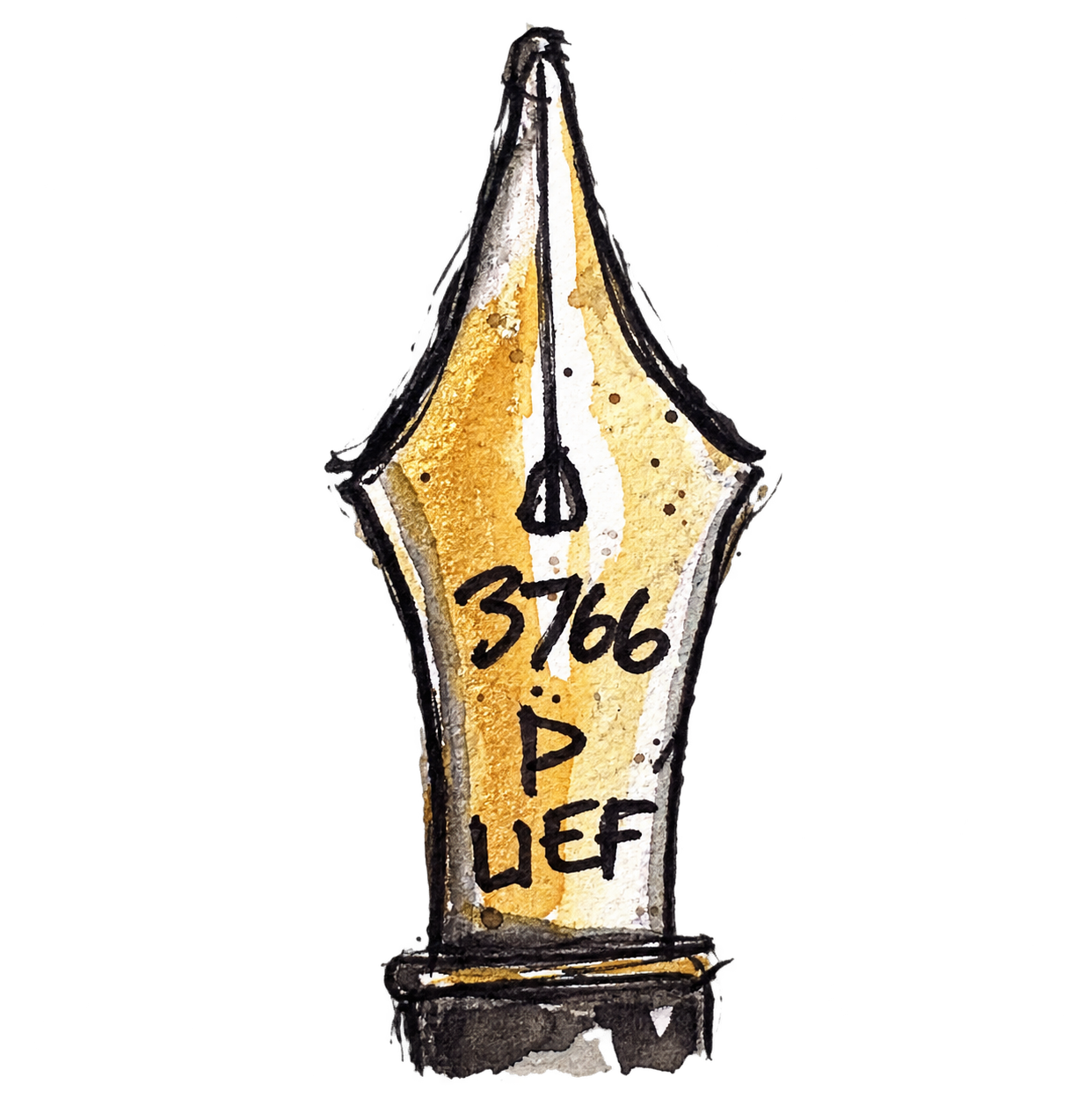
I have acquired some new pens with very strange nibs that even one of the pen makers call the line Special Nibs. I understand that these pens are primarily used for small writing and Japanese character writing.
This challenge starts with exercises that aim to show me what each instrument does, then increasingly combine them until they start to work together in different ways. By the end of the challenge I will hopefully be able to choose the tool—or combination of tools—that suits the subject.
The three pens are particularly interesting together:
Kuretake Fountain Brush Pen No. 40 Sable — genuine sable brush hairs, so pressure, direction, speed and ink loading become part of the mark. It should force me away from controlled outlining and towards confident shapes, shadows and expressive strokes.

Sailor Naginata Fude de Mannen — line width changes dramatically with drawing angle. This will give me thin architectural marks through to broad sweeps without changing pens.

Sailor Naginata Concord — especially interesting because of the radically different marks available from the normal and reverse sides of the nib. This one could become almost a drawing instrument in its own right.

One of the recurring aims in the previous challenges has been using fewer lines and knowing when to stop. A sable brush is almost the perfect instrument for doing minimal lines. You simply cannot hatch every brick and fiddle endlessly with detail in quite the same way. A single brush stroke may have to describe an entire shadow, tree trunk or figure.
The structure of the 30 days will be roughly as follows: discovery → control → combination → freedom. Early days could be deceptively simple—lines, curves, trees, doorways, figures, rooflines, shadows—because it will be necessary to genuinely learning the tools rather than producing thirty finished pictures. Later on in the challenge architecture and urban scenes will be back to see what these pens do to my style.
