Today’s study focused on the classical pediment, looking at the relationship between the triangular pediment, the entablature beneath it and the supporting columns. The preliminary was made with the Sailor Fude, using broad strokes to establish the main structure, projection and areas of shadow. It proved useful as a way of working out the architecture before starting the finished sketch. The final drawing concentrated on the main mouldings and projecting edges, with selected details rather than attempting to reproduce everything using the Sailor Pro Gear HEF and buff titanium, some ochre and ultramarine blue. The inscription in the tympanum is suggested rather than copied, while the shadows between the columns have been used to establish the depth of the colonnade.
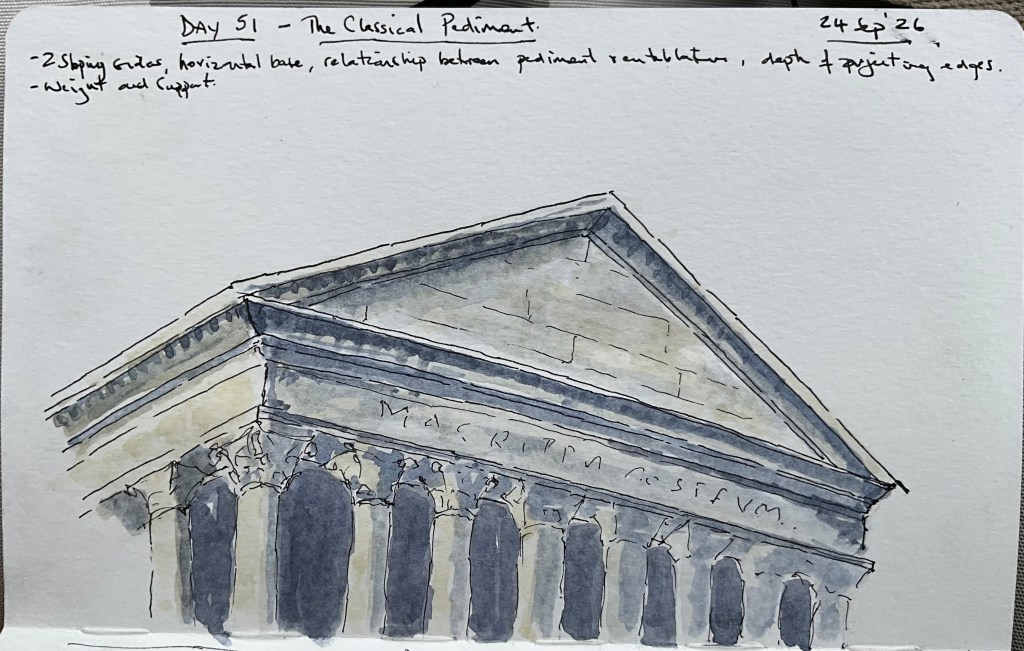
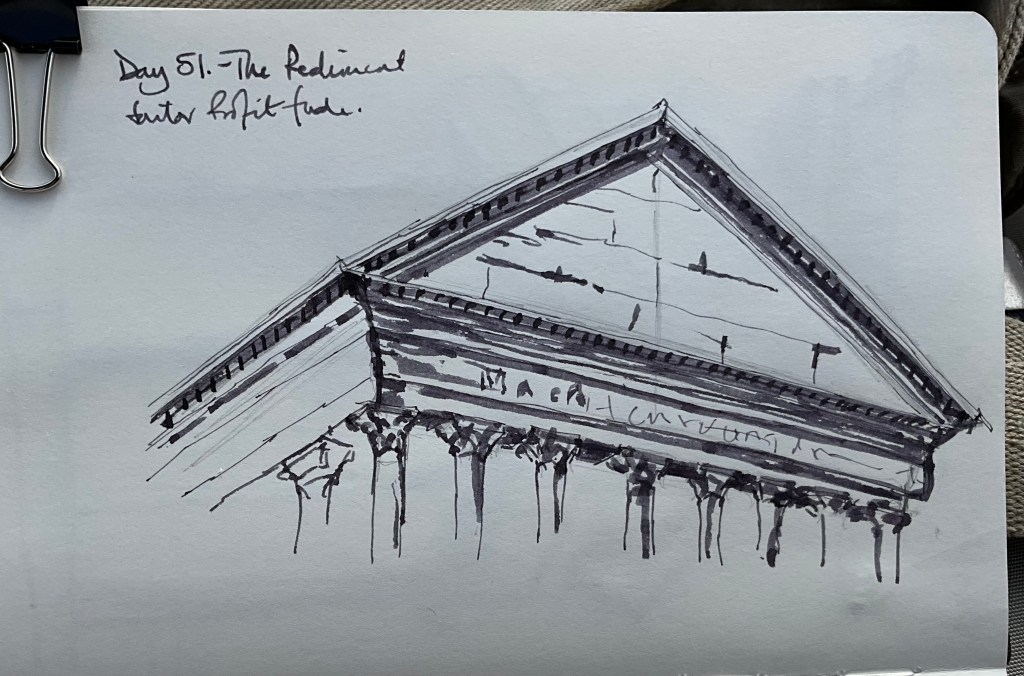
The challenge was less about drawing a pediment accurately and more about deciding which parts of the architecture need to be described and which can simply be suggested. The Fude preliminary and the finished sketch also made an interesting comparison: broad, dark marks for establishing the structure, followed by a more restrained combination of pen and wash.
Score – 8/10 Very happy with this though I do feel there is much room for improvement.


Leave a comment